
Fenix Intrinsically Safe Lights
Certified for use in hazardous environments where flammable gases, vapours, or dust may be present. These lights carry ATEX and IECEx ratings confirming they will not produce sparks, arcs, or surface temperatures capable of igniting an explosive atmosphere.
Where they are used
Oil and gas facilities, refineries, chemical plants, mining operations, and confined spaces classified as hazardous areas. When selecting a light, verify that the certification on the specific model matches your work environment classification — zone rating is the first thing to check against your site's safety audit.
Specs and compliance
Fenix intrinsically safe lights are built with the same quality and durability as the standard lineup, with additional design safeguards required for hazardous certification. Key criteria include zone rating, lumen output, beam type, runtime, and compliance with your site's audit requirements. For general industrial use outside certified zones, our work lights are typically the better value.
Fenix WF30RE
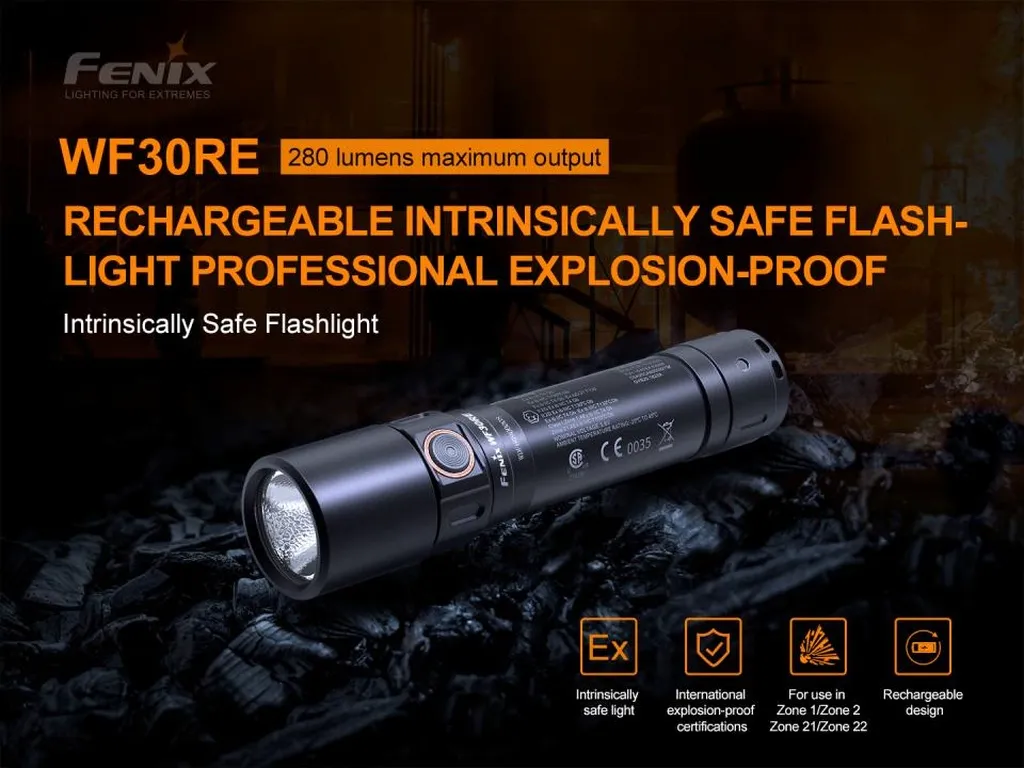
A 280-lumen intrinsically safe flashlight certified for explosive gas and combustible dust environments.
Fenix WF11E
Magnetic Intrinsically Safe Flashlight
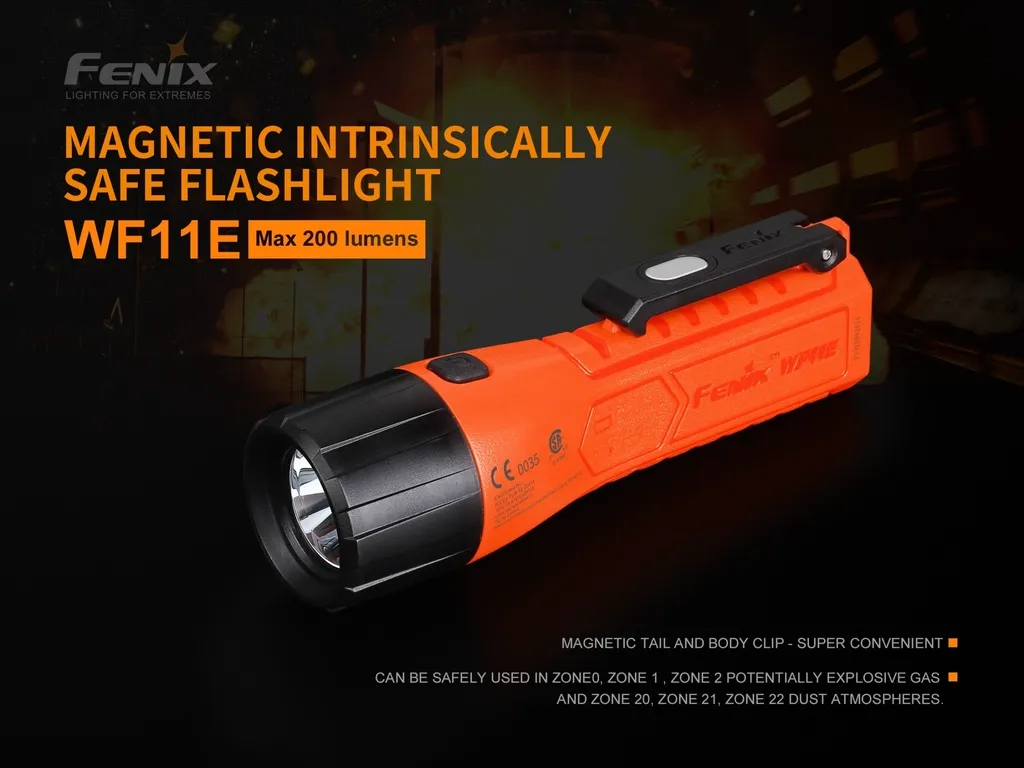
A 200-lumen intrinsically safe flashlight with a magnetic tailcap and body clip plus a 185-meter beam.
Frequently asked questions
- What is an intrinsically safe flashlight?
- An intrinsically safe flashlight is engineered so it cannot produce a spark, arc, or surface temperature capable of igniting flammable gases, vapours, or dust. Models that carry ATEX and IECEx certification have been tested and approved for use in classified hazardous atmospheres. A standard flashlight, no matter how well built, is not safe to use in these environments unless it carries the certification.
- Where are intrinsically safe lights required?
- They are used in oil and gas facilities, refineries, chemical plants, mining operations, grain handling, and confined spaces classified as hazardous areas. Any environment where flammable gas, vapour, or combustible dust may be present typically requires equipment rated for that hazard zone — including flashlights and headlamps.
- How do I choose the right zone rating?
- Match the certification on the specific light to your work environment's hazardous-area classification. Zone rating is the first thing to check against your site's safety audit — the light's ATEX/IECEx marking must cover the zone you will use it in. If you are unsure of your site classification, confirm with your site safety officer before selecting a light.
- How is an intrinsically safe light different from a regular work light?
- Intrinsically safe lights are built with the same durability as the standard lineup but add design safeguards required for hazardous certification, which is why they are specified by zone rating. They are only necessary inside certified hazardous zones. For general industrial and trade work outside those zones, our work lights deliver more output and runtime for the money.
