
Fenix Battery Chargers
Smart chargers designed for the rechargeable lithium-ion cells used in Fenix flashlights and headlamps — primarily 18650, 21700, and 16340 sizes. A good charger protects your batteries and extends their lifespan.
Smart charging for lithium-ion
Fenix chargers monitor voltage, prevent overcharge, and detect faulty cells. They use USB-C input for convenient power and include LCD or LED indicators showing charge status per bay. For topping up a single cell while travelling, compact single-bay models are practical.
Single-bay versus multi-bay
If you carry multiple lights or rotate batteries, a multi-bay charger is a practical investment — many also function as USB power banks for charging phones and other devices. For the actual cells, see our rechargeable batteries page. Manufacturer-matched batteries and chargers deliver the rated output and runtime your lights were designed for.
Fenix ARE-A4
Four Bays Smart Battery Charger
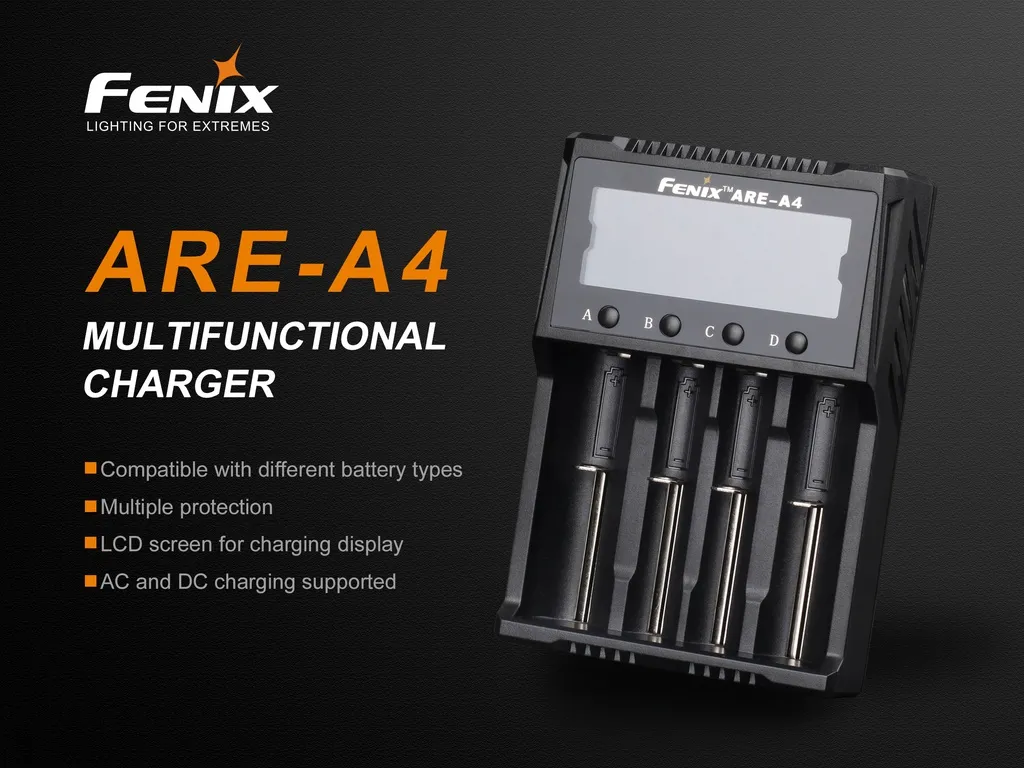
A four-bay smart charger for Li-ion and Ni-MH/Ni-Cd cells with independent LCD monitoring.
Fenix ARE-A2
Two Bays Smart Battery Charger
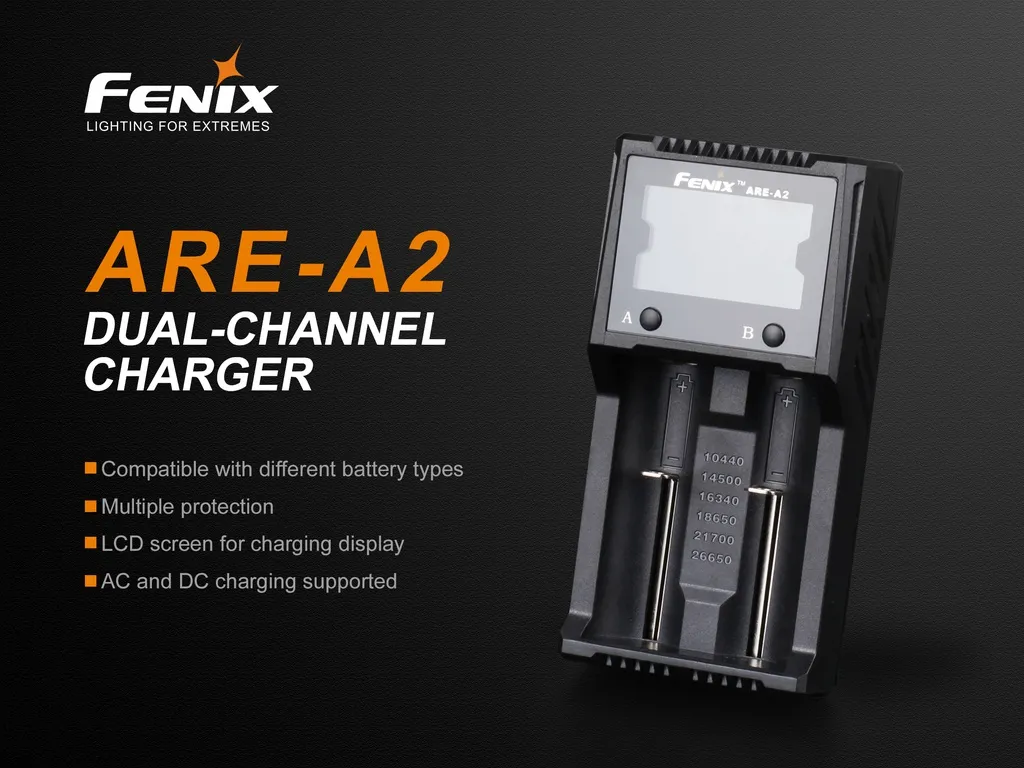
A dual-channel smart charger for Li-ion cells from 10440 to 26650 with LCD status.
Frequently asked questions
- Which charger do I need for 18650 and 21700 cells?
- A smart lithium-ion charger that supports the cell sizes you use — most Fenix chargers handle 18650, 21700, and 16340 in the same bays. Look for USB-C input and per-bay status indicators. If you carry multiple lights or rotate batteries, a multi-bay charger lets you top up several cells at once.
- Do I need a charger if my flashlight already has a USB-C port?
- Not always, but it helps. A built-in USB-C port charges the cell while it is inside the light, which is convenient for a single battery. A separate charger is what you need to rotate spare cells, charge bare batteries, or keep a fully charged spare ready while the light is in use. Heavy users typically own both.
- Single-bay or multi-bay charger — which should I get?
- A single-bay charger is compact and fine for one cell or travel. A multi-bay charger is the better investment if you run several lights or rotate batteries, since it charges multiple cells at once — and many multi-bay models double as a USB power bank for phones and other devices. Match the bay sizes to the cells your lights use.
- What does a smart charger do that a basic one does not?
- Smart chargers monitor each cell's voltage, stop charging when full to prevent overcharge, and detect faulty or unsafe cells. Many display charge status per bay on an LCD or LED readout. This protects your batteries, extends their lifespan, and is safer than a basic constant-current charger — important for the high-capacity lithium-ion cells used in Fenix lights.
