
Fenix Bike Lights
Bright, rechargeable bike lights for cyclists who ride in low-light conditions — commuting through city traffic, training on rural roads, or riding singletrack after dark. Every Fenix bike light is USB-C rechargeable and built with aluminium housings rated for rain, mud, and vibration.
Visibility, safety, and the law
Provincial highway traffic acts across Canada require a white front light and a red rear reflector or light when riding between sunset and sunrise. A daytime flash mode dramatically improves how early drivers spot you in mixed traffic and overcast weather. Aim the front beam slightly down so the hotspot lands on the road 10 to 15 metres ahead — not into oncoming eyes — and pair it with a rear blinker for full 360-degree visibility.
Commuting versus trail riding
A good bike light has to help you see the road or trail ahead and help drivers and other riders see you. For road commuting, look for a shaped beam cutoff that illuminates the lane without blinding oncoming traffic. For trail riding, prioritize raw output and a wide flood beam that reveals terrain changes at speed.
Specs and mounting
Compare lumens for brightness, beam pattern for coverage, runtime at your preferred output level, and mounting compatibility with your handlebar or helmet. Rear lights are sold separately. For spare cells and smart chargers to keep a second battery ready for long rides, see the chargers and batteries pages.
Cold-weather riding and runtime
Lithium-ion cells lose capacity as temperatures drop, so a winter commuter who gets 3 hours on medium in summer should plan for closer to 2 hours below freezing. Keep the light indoors between rides, top up over USB-C before you head out, and carry a spare cell on long rides. Sealed switches and IP-rated housings handle slush and salt spray, but wiping the lens after wet rides keeps the beam crisp.
Fenix BC05R V2.0
Rechargeable Bicycle Tail Light
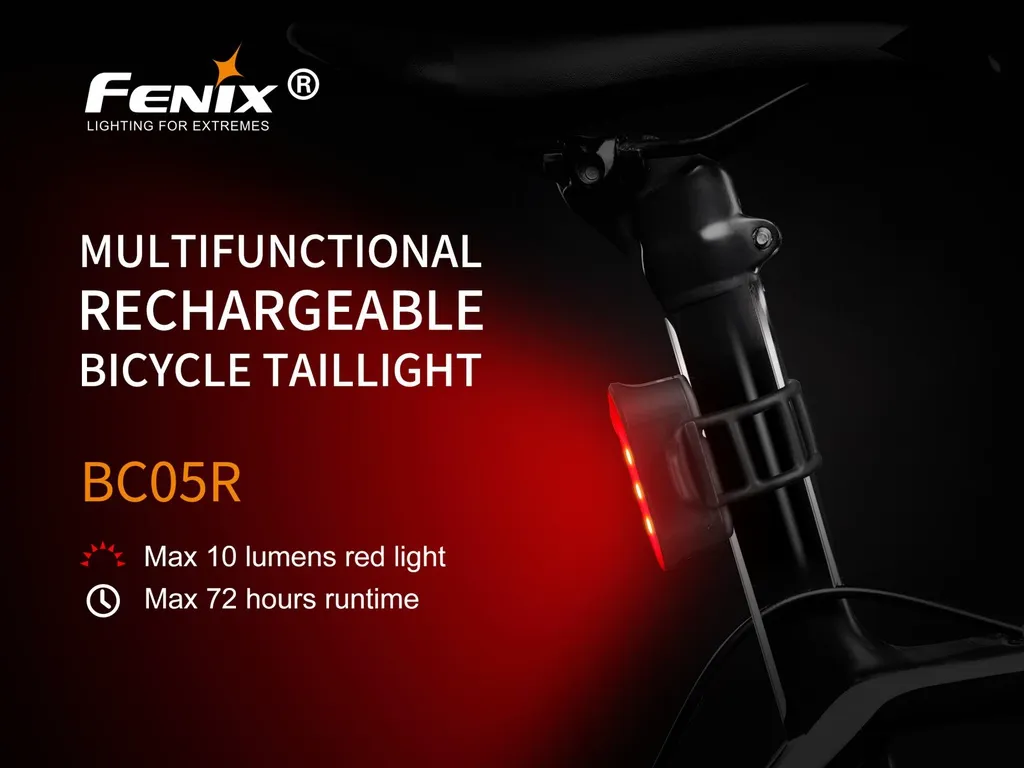
A 15-lumen rechargeable bike taillight with 180-degree visibility and removable body clip.
Fenix BC06R
Smart Brake Sensing Rechargeable Bicycle Taillight
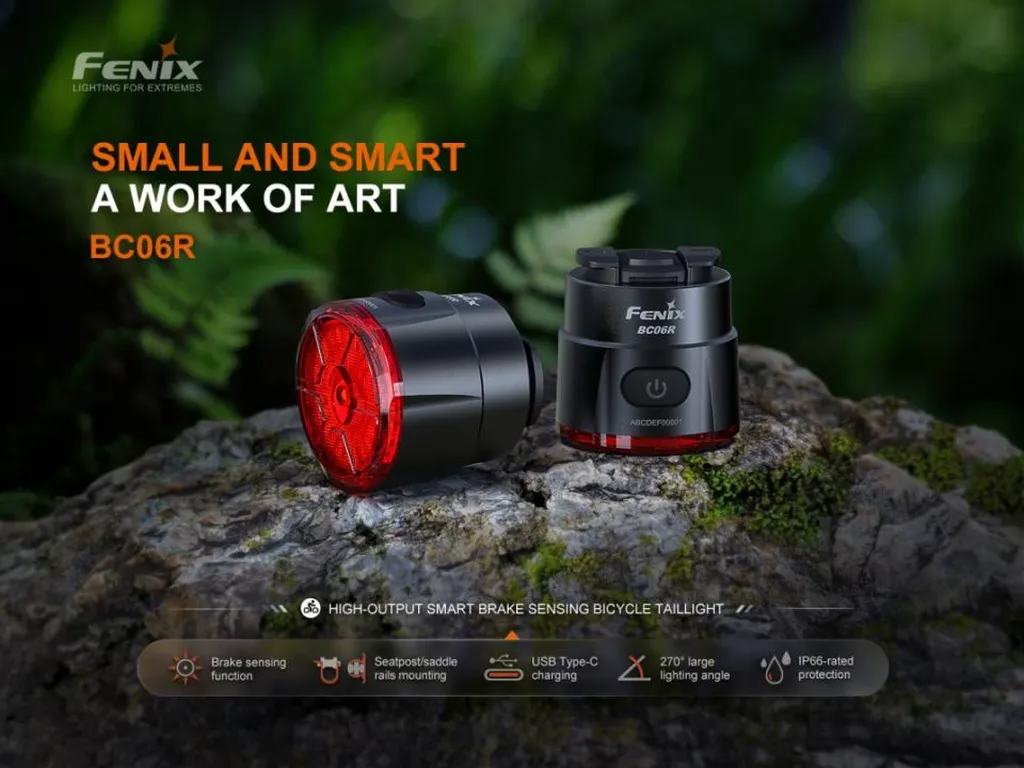
A 90-lumen rechargeable bike taillight with smart brake sensing and 270-degree visibility.
Fenix BC26R
Ultra Bright Rechargeable Bicycle Light
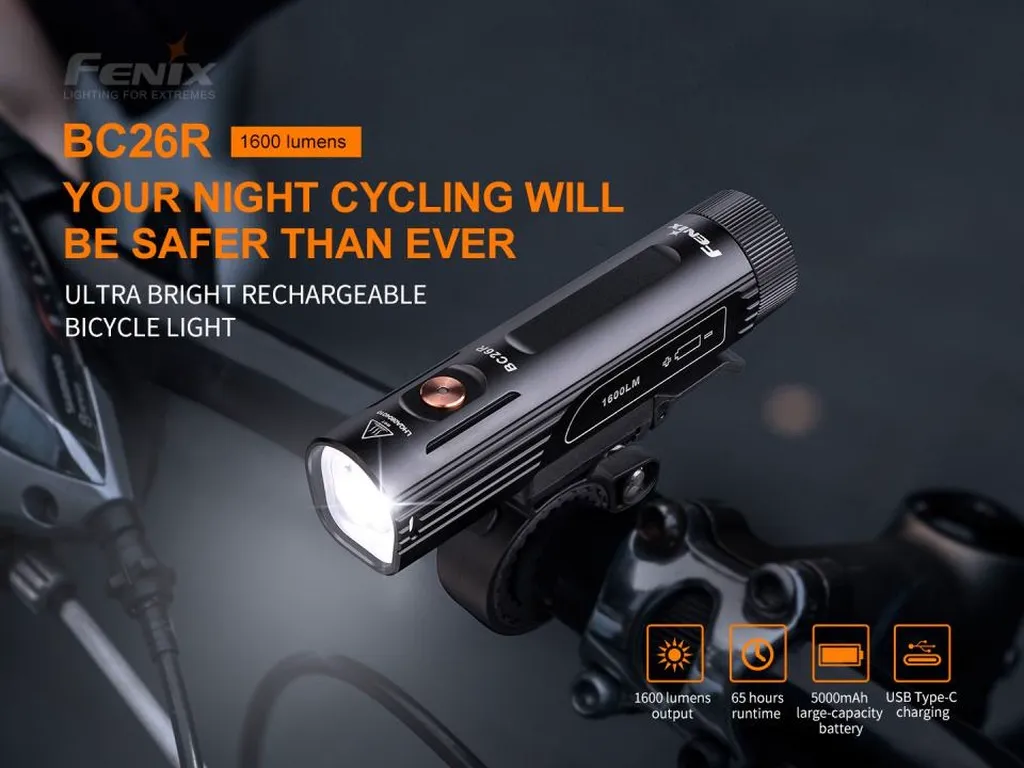
A 1,600-lumen rechargeable bike light with a 169-meter beam and quick-release mount.
Fenix BC28R
Smart Control Bicycle Light Combo
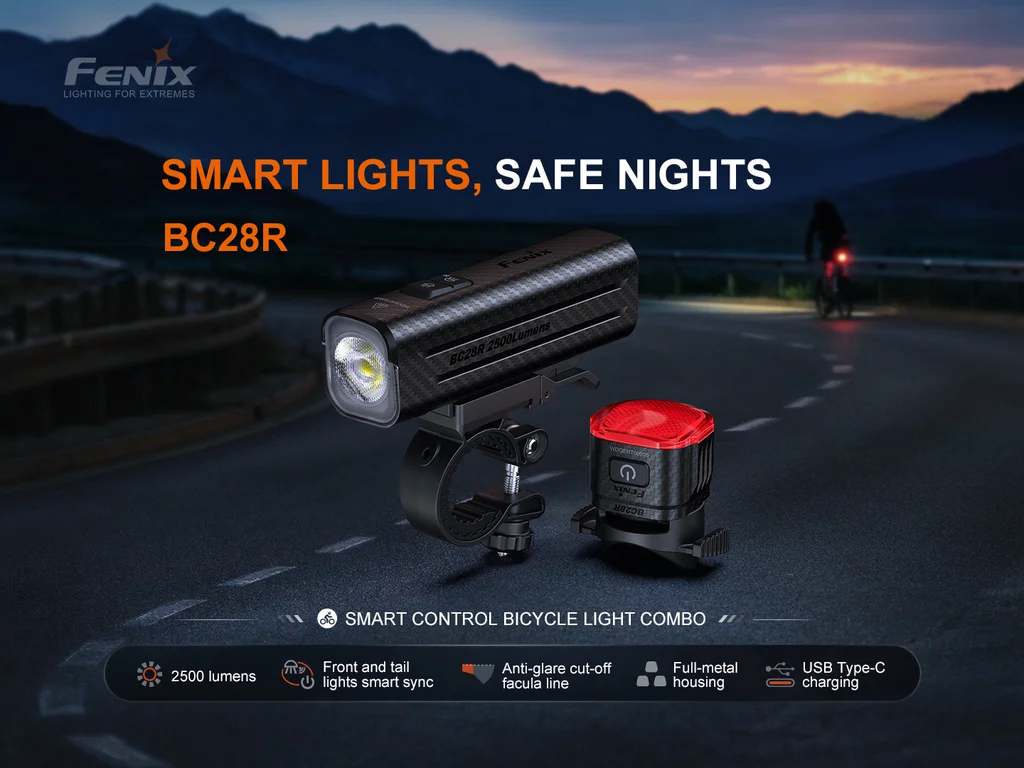
A 2,500-lumen smart-linked bike light combo with a 180-meter anti-glare front beam and a wireless 20-lumen tail light — built for road cycling, daily commuting, and mountain biking.
Fenix BC45R
High-Performance Mountain Bike Light
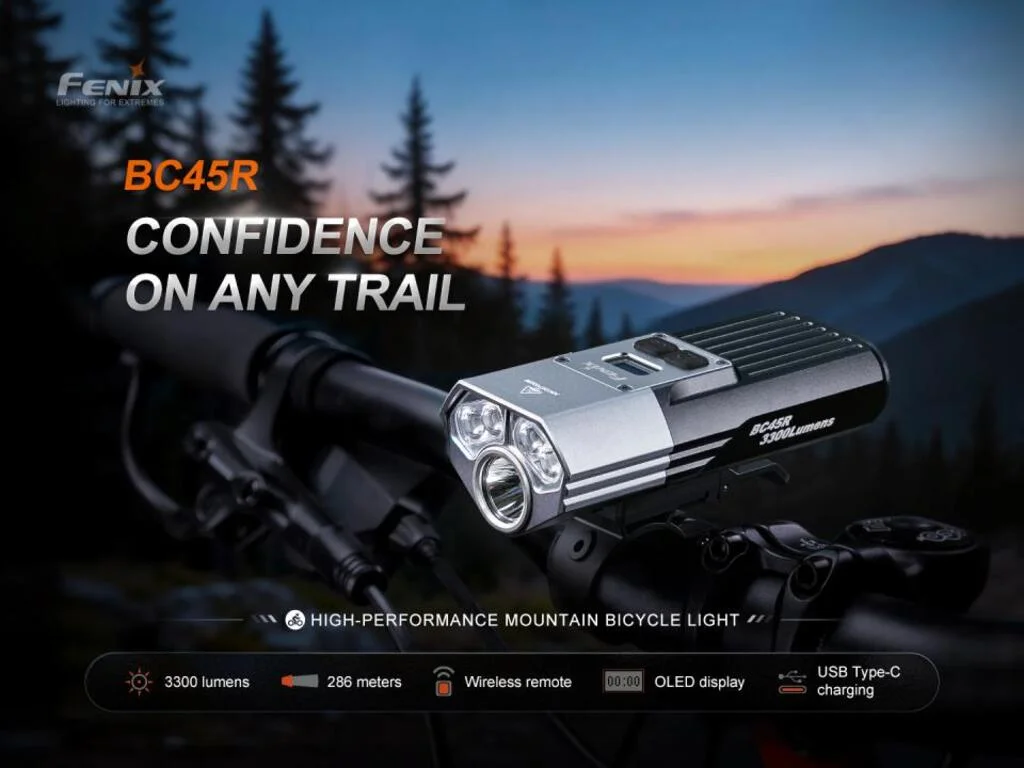
A 3,300-lumen high-performance mountain bike light with a 286-meter beam, independent high and low beams, a wireless handlebar remote, and an OLED battery display — powered by two replaceable 18650 batteries.
Frequently asked questions
- Are bike lights required by law in Canada?
- Yes. Provincial highway traffic acts across Canada require a white front light and a red rear reflector or light when cycling between sunset and sunrise. A steady or flashing front light keeps you legal and visible, and a daytime flash mode dramatically improves how early drivers spot you in mixed traffic and overcast weather. Rules vary slightly by province, so check your local highway traffic act for specifics.
- How many lumens do I need for commuting versus trail riding?
- For road commuting, 200 to 800 lumens with a shaped beam cutoff lights the lane without blinding oncoming traffic. For trail and off-road riding, 800 to 1,600 lumens with a wide flood beam reveals terrain changes at speed. Commuters should prioritize a clean beam pattern and a daytime flash; trail riders should prioritize raw output and runtime at their working level.
- How should I aim my bike light?
- Aim the front beam slightly downward so the hot-spot lands on the road 10 to 15 metres ahead — not into the eyes of oncoming traffic. This lights your path where it matters while keeping you courteous and legal. Pair the front light with a rear blinker for full 360-degree visibility; rear lights are sold separately.
- How do bike lights perform in cold Canadian weather?
- Lithium-ion cells lose capacity as temperatures drop, so a light that runs 3 hours on medium in summer should be planned for closer to 2 hours below freezing. Keep the light indoors between rides, top it up over USB-C before heading out, and carry a spare cell on long winter rides. Sealed switches and IP-rated housings handle slush and road salt — just wipe the lens after wet rides.
