
Fenix Rechargeable Batteries
High-capacity lithium-ion cells built for the demands of high-drain LED flashlights and headlamps. The most common sizes are 18650 and 21700, which power the majority of Fenix handheld lights.
Sizes and capacities
Fenix also offers 16340, 14500, and specialty cells for smaller models. Key specs are capacity in milliamp-hours (mAh) for runtime, discharge rate for high-output performance, and whether the cell includes built-in USB-C charging or requires an external charger. All Fenix batteries include protection circuits to prevent over-discharge and short circuits.
Why manufacturer-matched matters
Using manufacturer-matched batteries ensures your flashlight delivers rated output and runtime. Mismatched or counterfeit cells can damage the light, reduce output, or fail early. If you use your lights daily, keeping one or two spare cells fully charged is the easiest way to guarantee uninterrupted runtime. For charging, see our smart chargers page.
Fenix ARB-L21-6000B
6000mAh Li-ion USB-C Rechargeable Battery
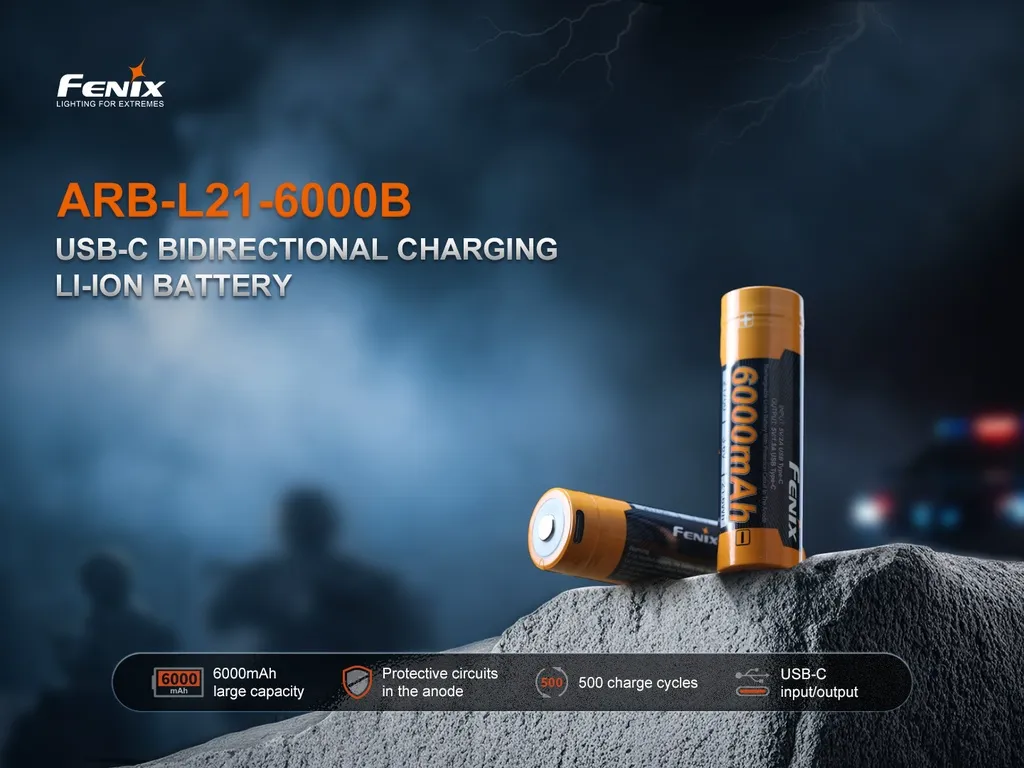
A 21700 6000mAh rechargeable battery with built-in USB-C charging and power-bank output.
Fenix ARB-L21-6000
21700 6000mAh Li-ion Rechargeable Battery
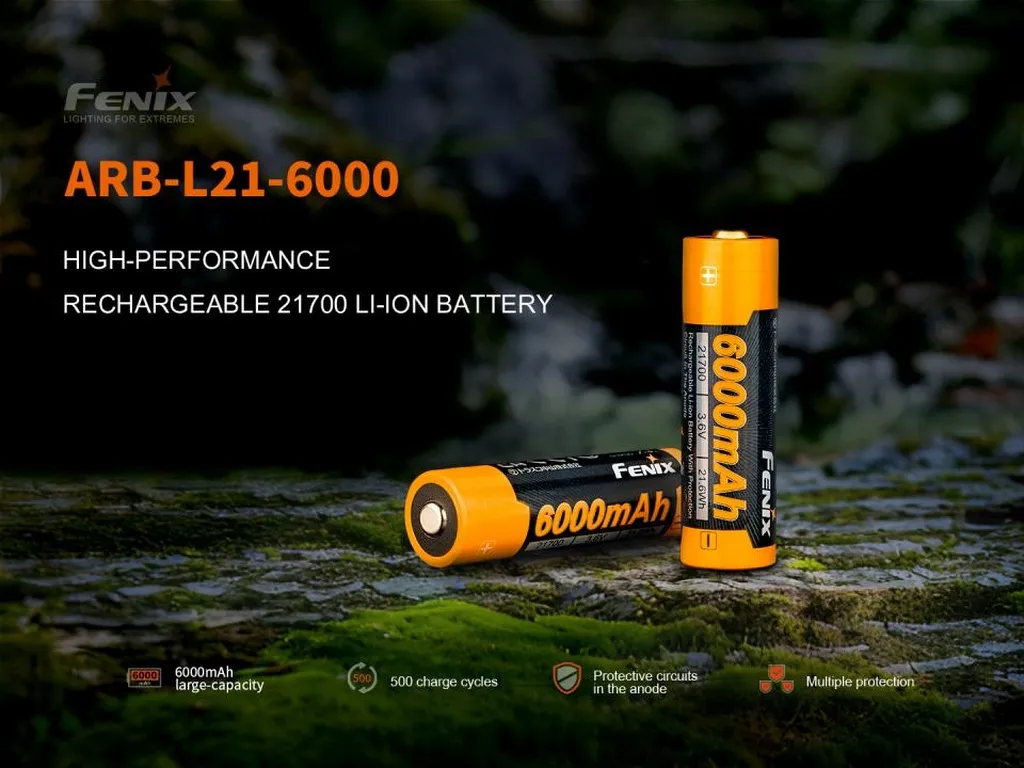
A 21700 6000mAh rechargeable battery with 10A discharge for high-output Fenix lights.
Fenix ARB-L21-5000 V2.0
21700 5000mAh Li-ion Rechargeable Battery
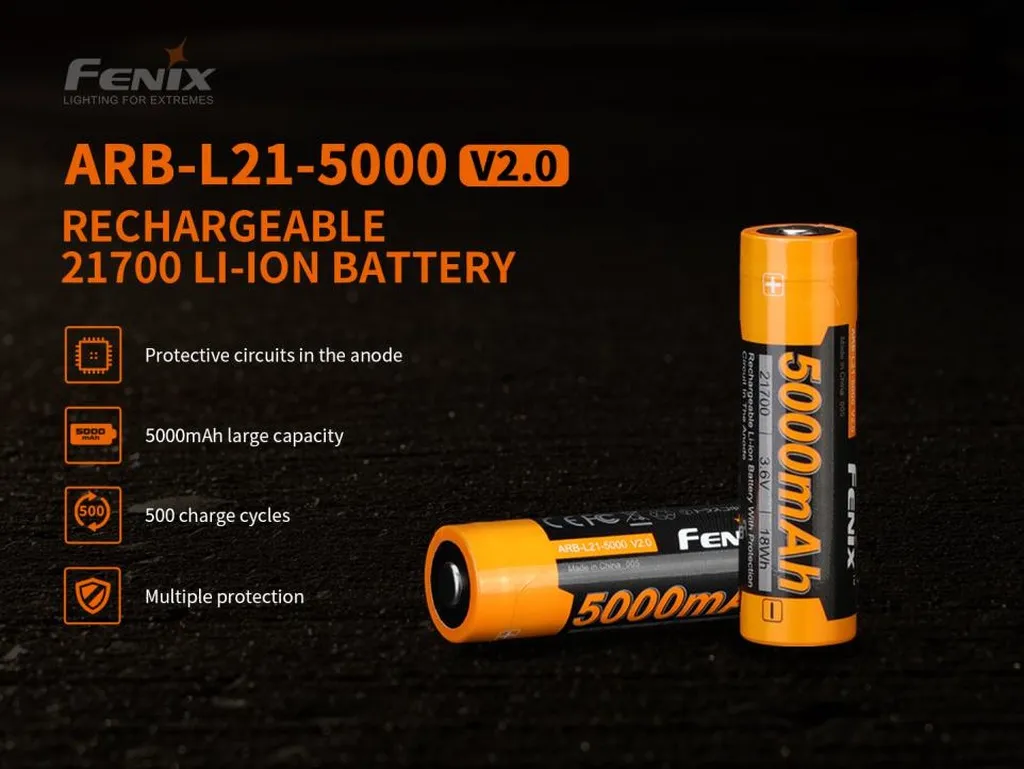
A 21700 5000mAh rechargeable battery (V2.0) with integrated protection circuit.
Fenix ARB-L18-4000U
18650 4000mAh Li-ion USB-CRechargeable Battery
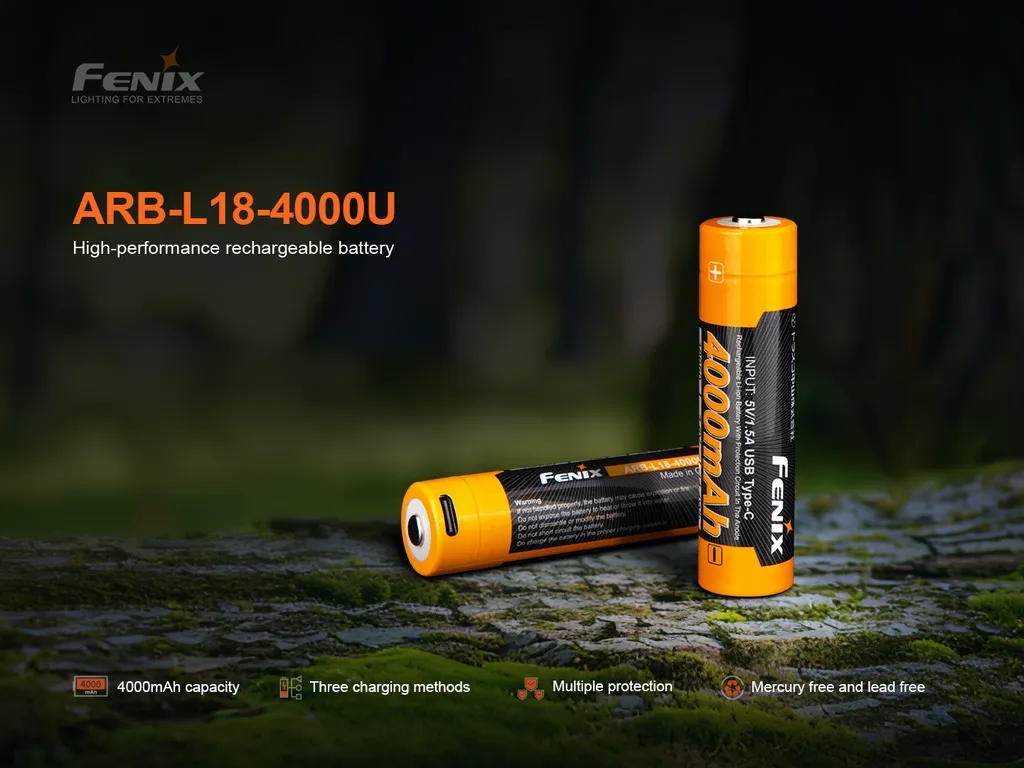
An 18650 4000mAh rechargeable battery with built-in USB-C charging.
Fenix ARB-L18-3500U
18650 3500mAh Li-ion USB Rechargeable Battery
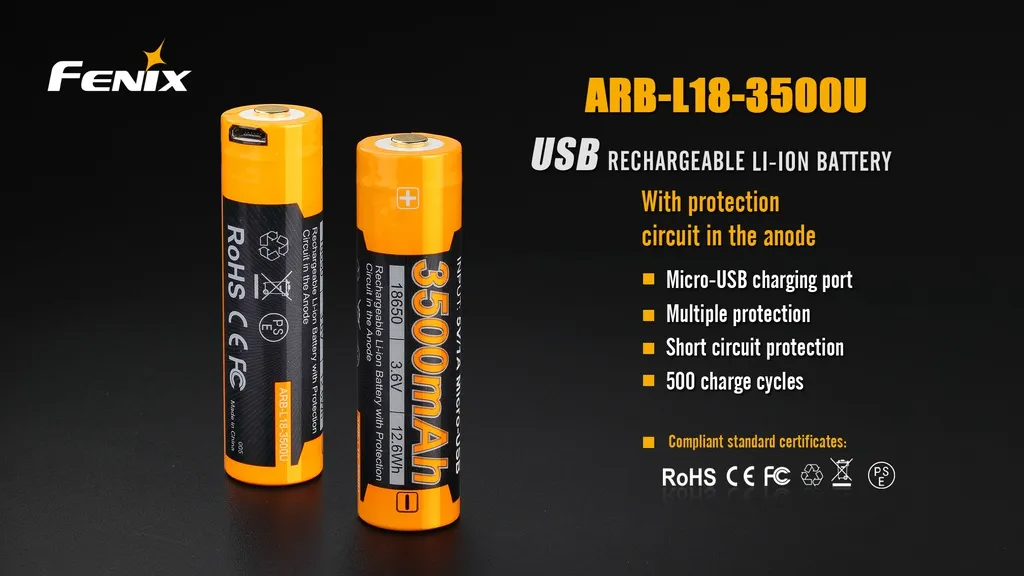
An 18650 3500mAh rechargeable battery with built-in micro-USB charging.
Fenix ARB-L18-1100
Rechargeable 18350 Li-Ion Battery
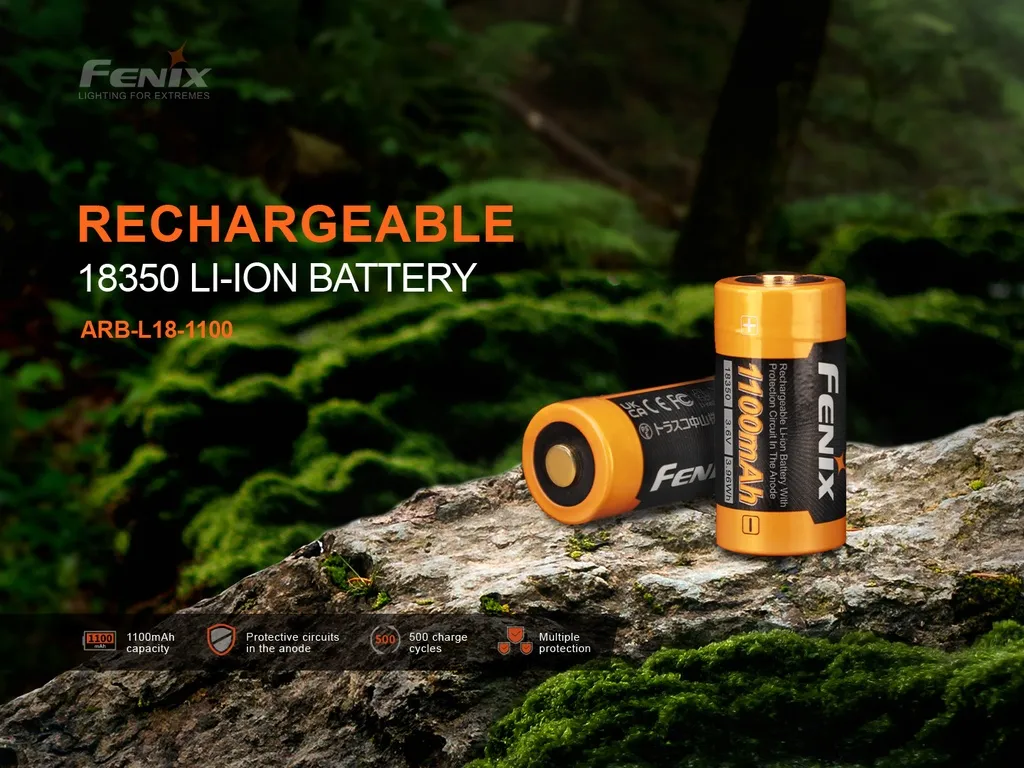
An 18350 1100mAh rechargeable battery with 7A discharge for compact Fenix lights.
Fenix ARB-L18-1600
Rechargeable 18350 Li-Ion Battery
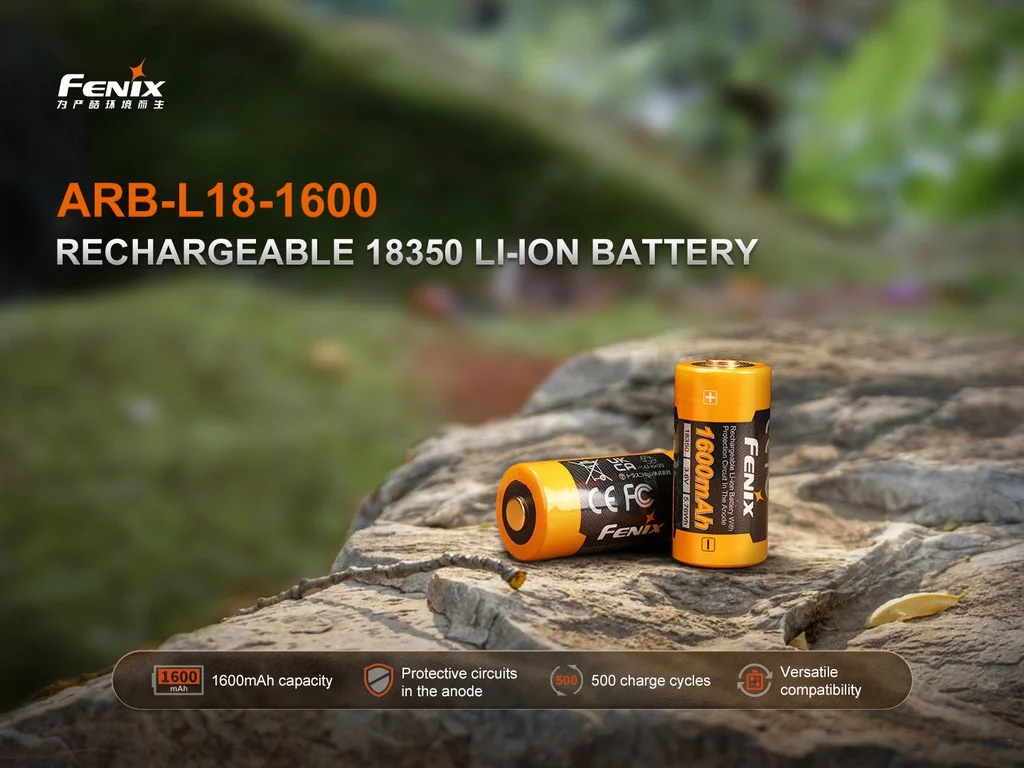
An 18350 1600mAh rechargeable battery — a drop-in upgrade for Fenix lights that take the ARB-L18-1100.
Fenix ARB-L16-800UP
16340 800mAh Li-ion USB-C Rechargeable Battery
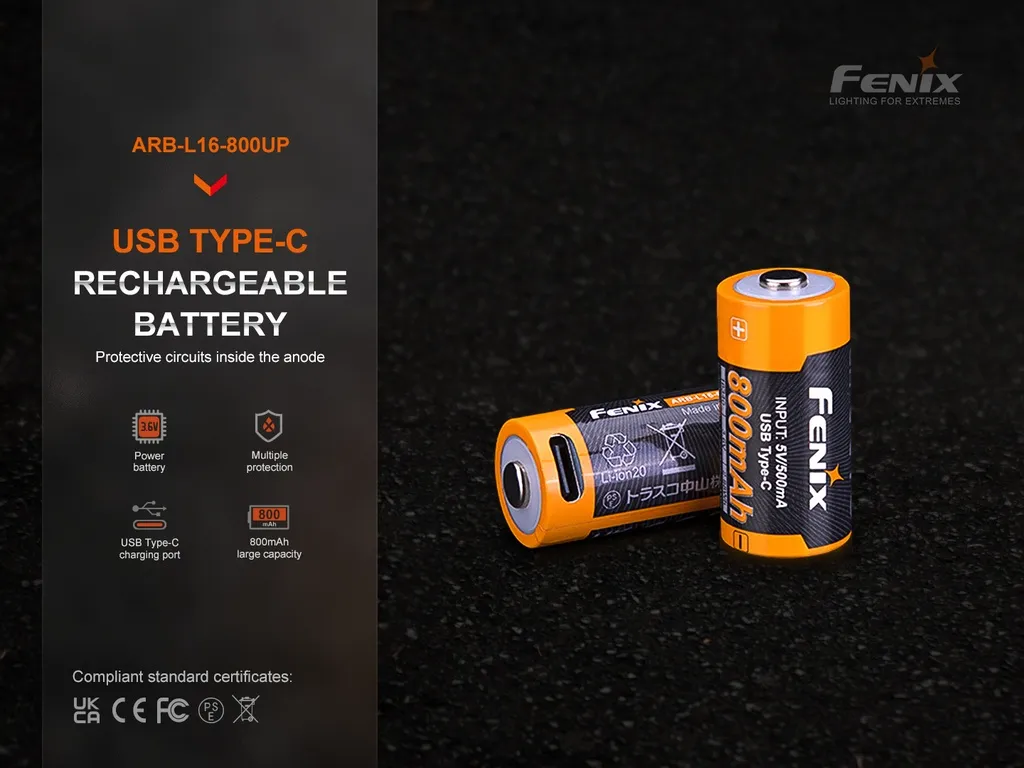
A 16340 800mAh rechargeable battery with built-in USB-C and heavy-load discharge.
Fenix ARB-L14-1600U2
1600mAh Li-ion USB Rechargeable Battery for LD22 V2.0
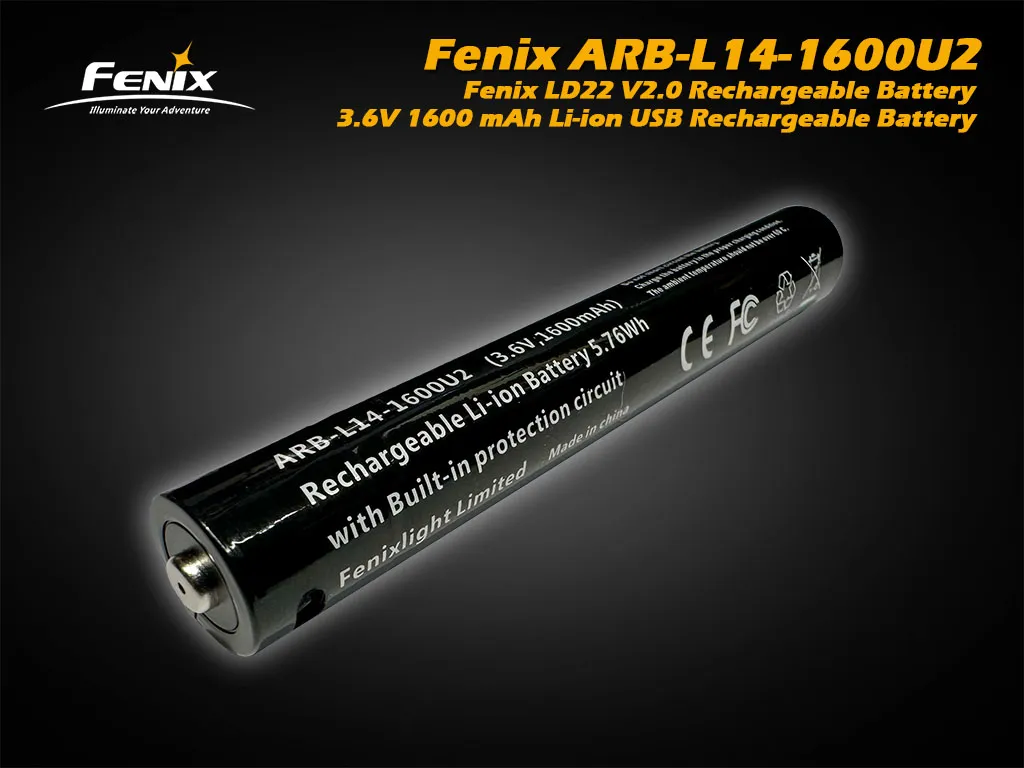
A 14500-format 1600mAh rechargeable battery with built-in USB charging for Fenix LD22 V2.0.
Frequently asked questions
- What battery does my Fenix flashlight use?
- It depends on the model. Most Fenix handhelds run on a rechargeable 18650 or 21700 lithium-ion cell; smaller EDC and keychain lights use 16340 or 14500 cells. The product page for each light lists its battery, and many newer models include the cell and a built-in USB-C charging port. Check your light's spec sheet before buying spares so you get the right size.
- Can I use regular AA, AAA, or alkaline batteries?
- Some Fenix lights are designed for AA or accept a CR123A primary, but many high-output models require rechargeable lithium-ion cells to deliver their rated brightness — alkaline batteries cannot supply enough current. Always check the model's supported battery types, never mix old and new cells or different chemistries, and use protected cells where specified. Using the wrong battery can reduce output or damage the light.
- Why buy manufacturer-matched Fenix batteries?
- Fenix lights are tuned around the discharge characteristics of genuine Fenix cells, so manufacturer-matched batteries deliver the rated output and runtime the light was designed for. Mismatched or counterfeit cells can reduce performance, fail early, or damage the light. Genuine Fenix batteries also include protection circuits that guard against over-discharge and short circuits.
- How do I charge Fenix batteries — built-in port or external charger?
- Many Fenix cells and lights have a built-in USB-C port to charge the installed battery directly. To rotate spare cells or charge bare batteries, use a dedicated smart charger. Capacity is measured in milliamp-hours (mAh) — higher mAh means longer runtime — and discharge rate matters for high-output lights. See our chargers page for compatible smart chargers.
