
Fenix self-defence flashlights are designed for personal safety situations where a bright, disorienting light can be your most practical defensive tool. These lights feature high-lumen output with instant access to a tactical strobe mode that temporarily impairs an aggressor's vision and spatial orientation. Some models also include crenellated strike bezels for close-contact use as a last resort. Unlike many personal safety tools, a flashlight is a practical everyday item that also happens to be effective in an emergency. When choosing a self-defence light, prioritize instant-on activation, maximum output in the first moments of use, and a form factor that fits naturally in your hand with a firm grip. Compact size matters — a self-defence light is only useful if you actually carry it, so pocket-sized models are often the best choice.
How a Flashlight Works in a Self-Defence Situation
A high-lumen strobe aimed at an approaching person or animal disrupts dark-adapted vision for several seconds and breaks their orientation in low light. That window is what the tool gives you — enough time to move to safety, put distance between yourself and the threat, or reach a door, a vehicle, or other people. It does not incapacitate, and it is not a replacement for situational awareness or avoidance.
Strobe works best when the threat is in low light and your eyes are already adapted. In a dark parking lot, a wooded trail at dusk, or a late-night walk home, the contrast between your strobe output and the ambient darkness is largest — so the disorientation effect is strongest. In full daylight the effect is much weaker, and other tools or actions may serve you better.
Why a Flashlight Fits Where Other Tools Do Not
Unlike sprays, batons, or firearms, a handheld flashlight is legal to carry on flights, in schools, across provincial and international borders, and in most public buildings. It is the only self-defence-capable tool most Canadians can realistically keep on their person every day without exception. The same light also serves its everyday purpose — finding keys, walking pets, navigating a trail, or handling a power outage — so you never have to decide whether to carry it.
What to Look For in a Self-Defence Light
The features that matter for a defensive role are all practical:
- Instant strobe access. A dedicated tactical tail switch that fires strobe from off, without cycling through other modes, is the single most important feature. If you have to click through low and medium first, the tool is useless in the moment you need it.
- High output in the first second. Turbo mode output of 1,000 lumens or more is effective. Ramp-up delay is not acceptable — the light must hit full brightness immediately on activation.
- Pocket-sized form factor. A self-defence light only works if you carry it. A compact EDC flashlight that fits in a front pocket or clips to a belt is always better than a larger light left at home.
- Firm grip and a thumb-forward or icepick hold. Knurled body texture, a pocket clip, or a crenellated bezel helps you keep control of the light if contact happens.
- Rechargeable with reliable battery chemistry. USB-C rechargeable lights using modern 18650 or 21700 cells give consistent high output across the charge cycle. Avoid lights that dim rapidly as the battery drains.
Our Self-Defence Recommendations
Fenix TK25R
Multifunction Law Enforcement And Duty Flashlight
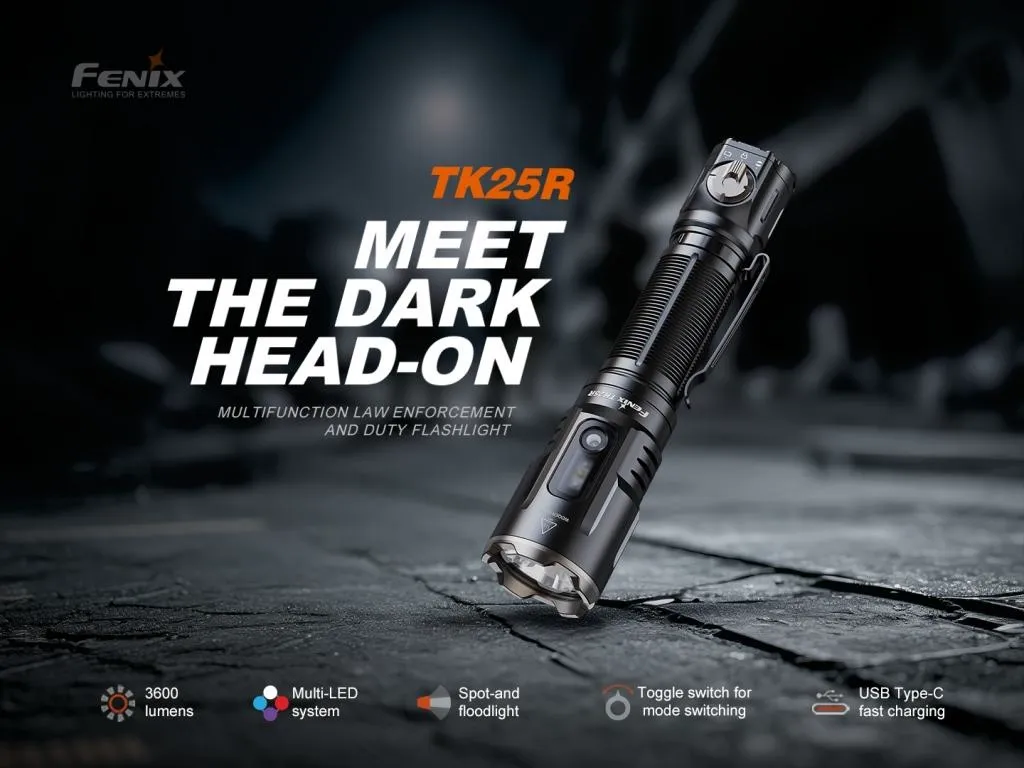
A 3,600-lumen multifunction rechargeable flashlight with a 350-meter beam and a broad multi-color mode set.
Fenix TK21R
Dual Tail Switch Military And Duty Flashlight
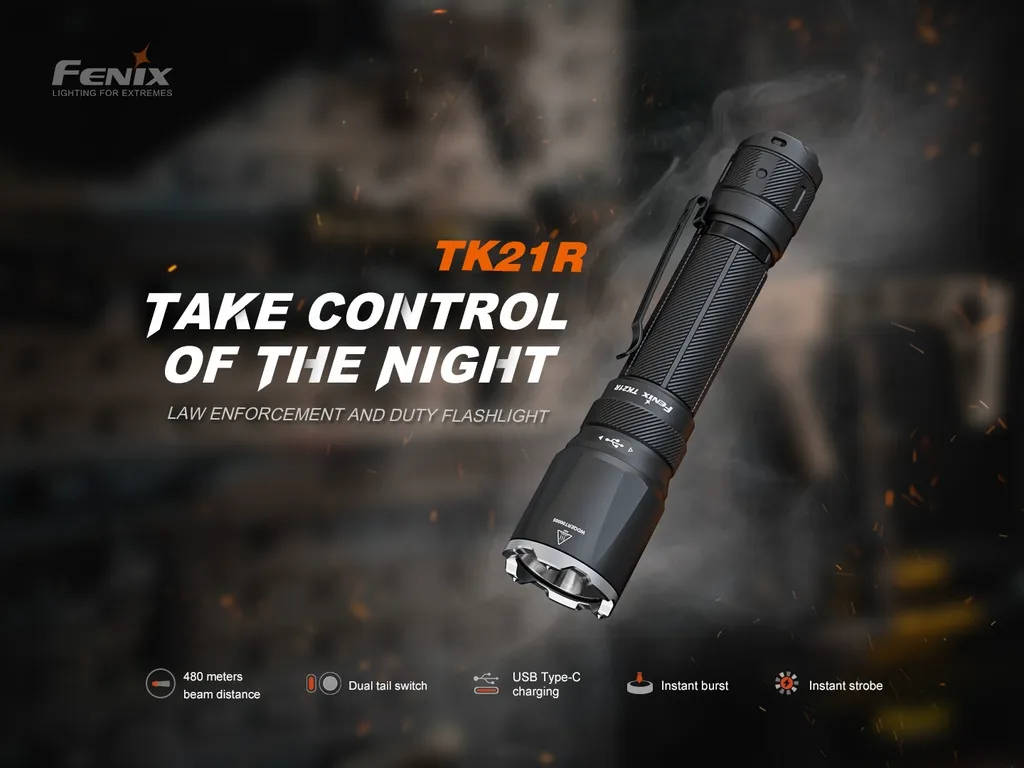
A 3,600-lumen rechargeable flashlight with a 480-meter beam and dual tail-switch controls.
Fenix TK17
Dual Tail Switch Tactical Flashlight
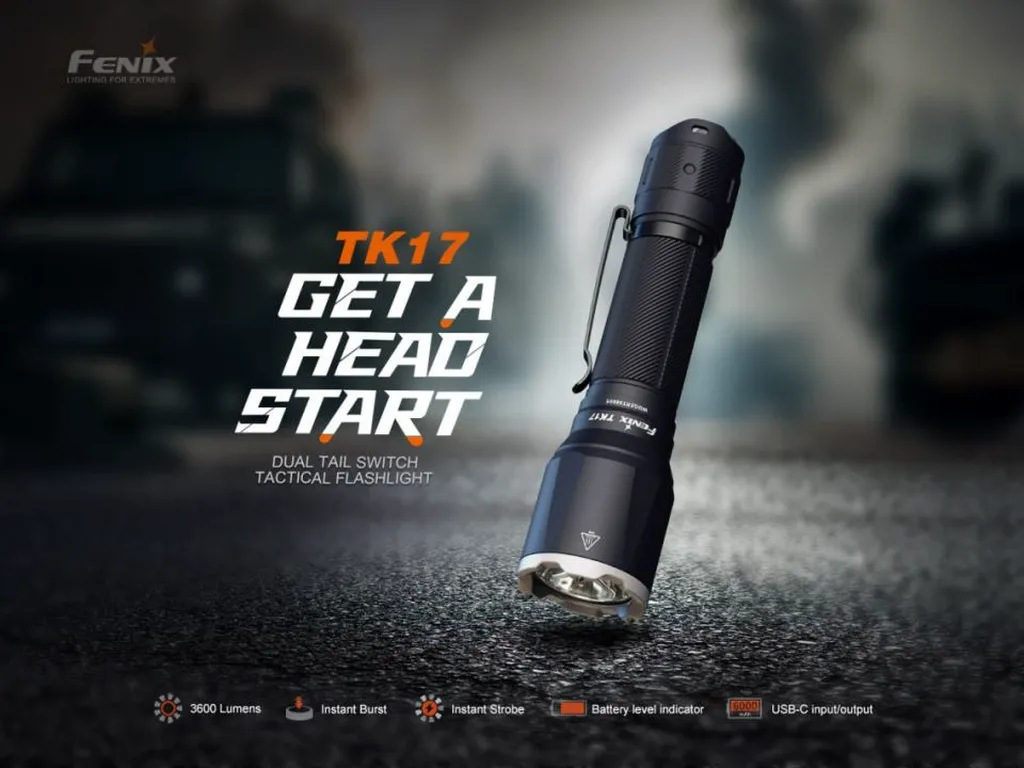
A 3,600-lumen rechargeable flashlight with a 330-meter beam and up to 60 hours of low-mode runtime.
Fenix PD45R ACE
Multi-Mode Tactical Flashlight
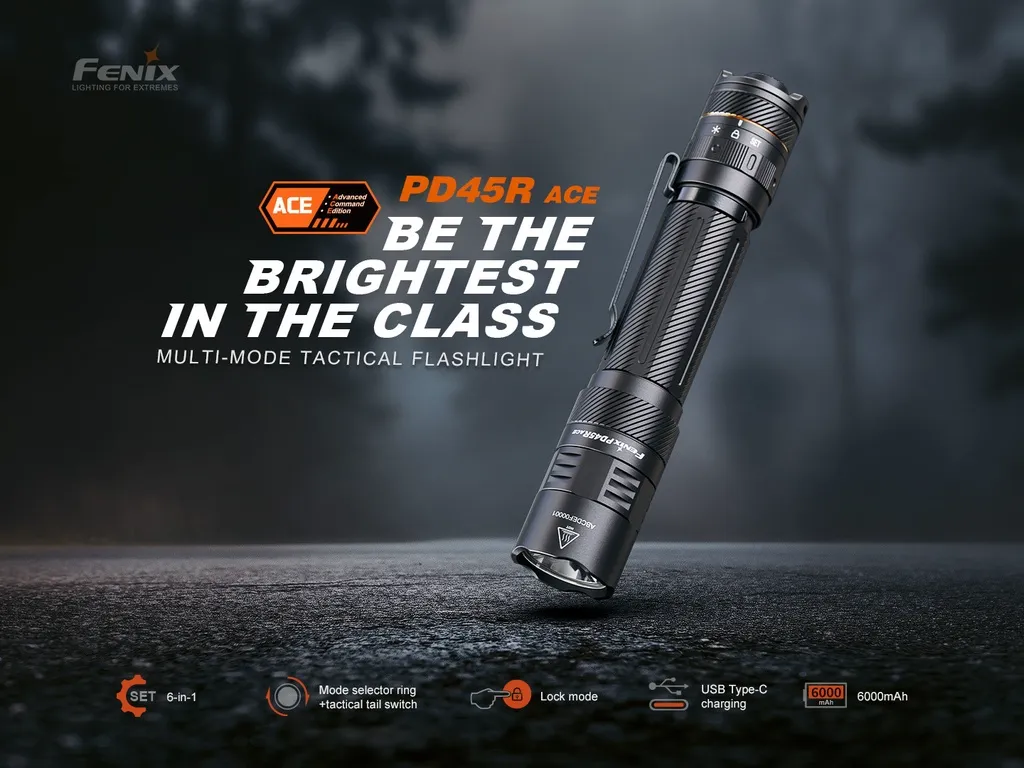
A compact 3,200-lumen rechargeable flashlight with a 410-meter beam and 57-hour Eco runtime.
Fenix TK16 V2.0
Dual Tail Switch Tactical Flashlight
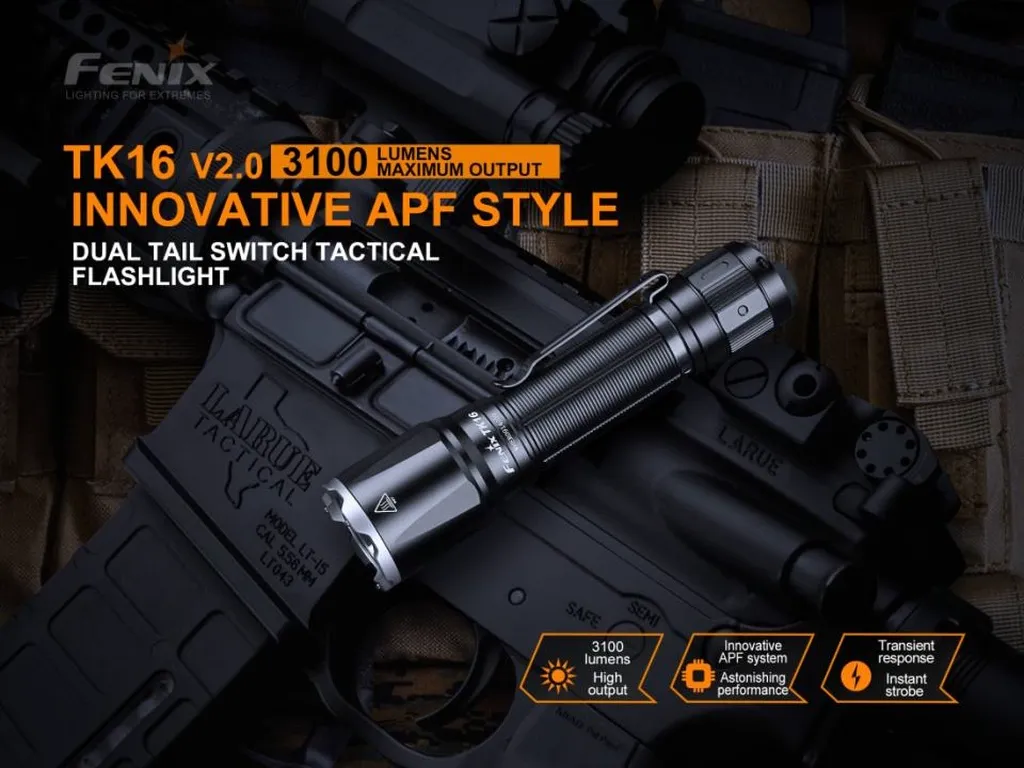
A 3,100-lumen rechargeable flashlight with a 380-meter beam and dual tail-switch controls.
Fenix C7 Pro
High-Performance, Versatile Flashlight
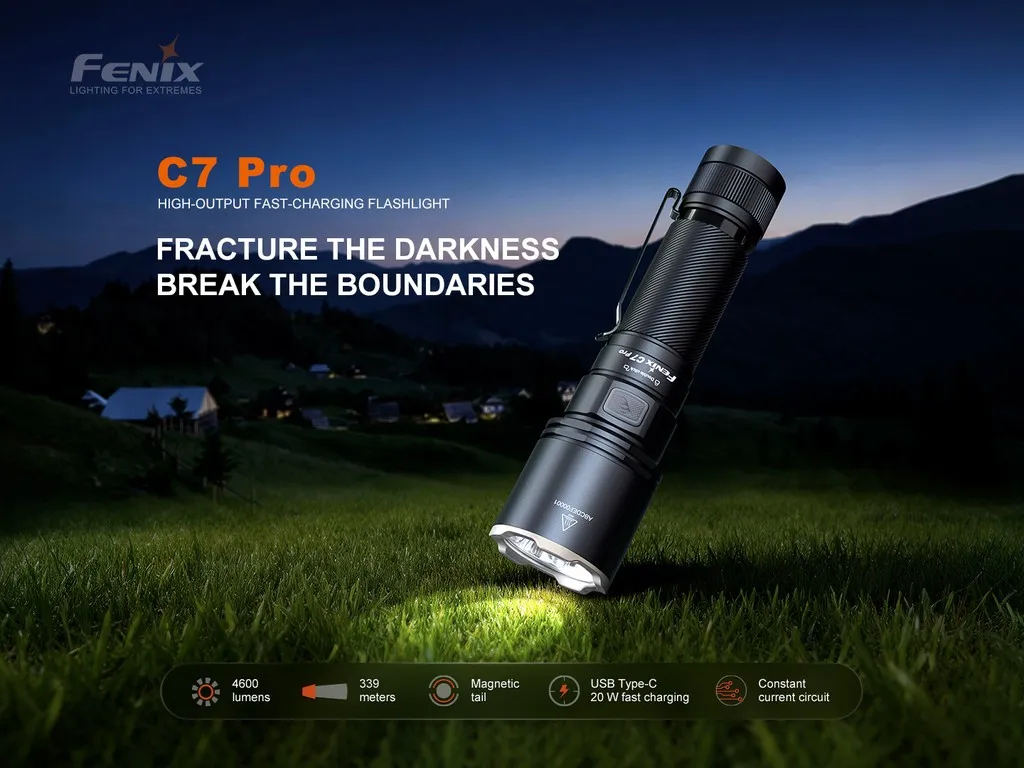
A 4,600-lumen quad-LED floodlight with an 87-degree beam, magnetic tailcap, and 20W USB-C fast charging.
Fenix WF26R
High-Performance Rechargeable Flashlight with Charging Dock
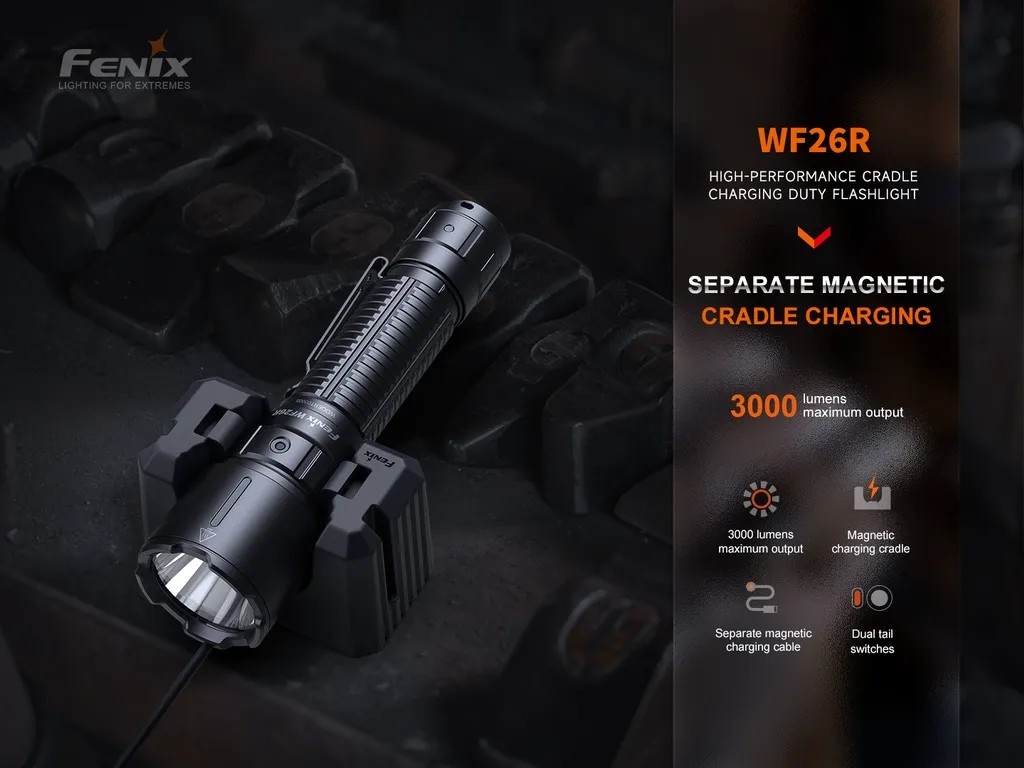
A 3,000-lumen rechargeable flashlight with a 450-meter beam and magnetic charging cradle.
Fenix E35R
High-Performance EDC Flashlight
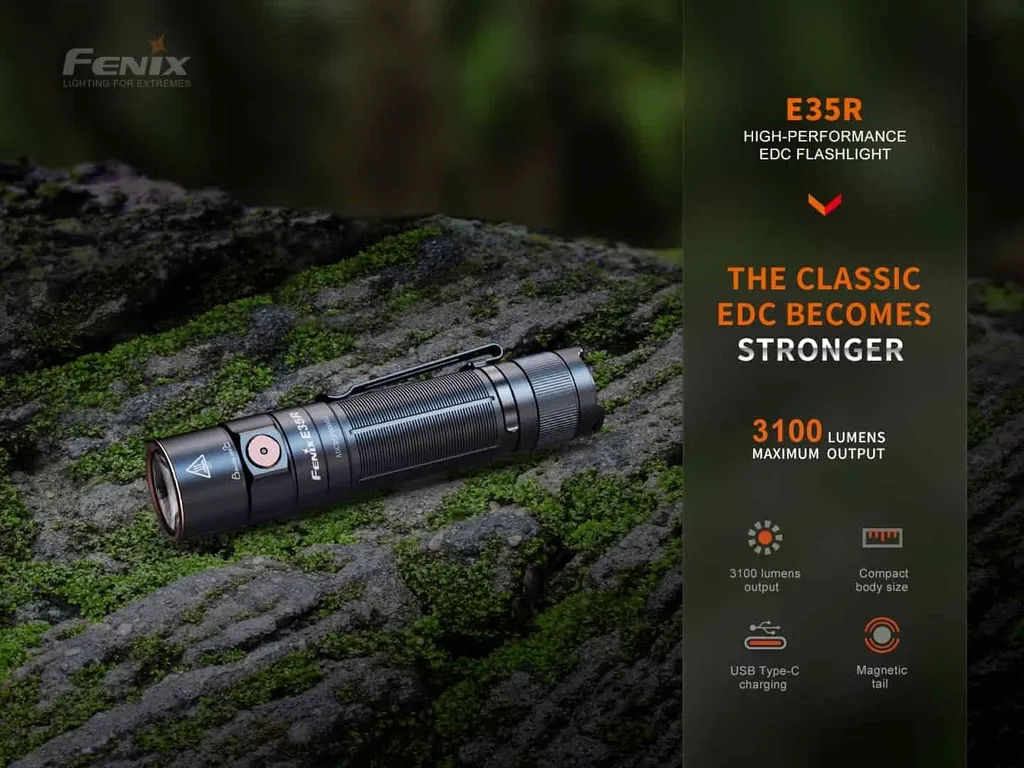
A compact 3,100-lumen EDC flashlight with a 260-meter beam and a magnetic tailcap.
Frequently asked questions
- Is it legal to carry a self-defence flashlight in Canada?
- Yes. A flashlight is a legal everyday tool to carry anywhere in Canada — on your person, in your vehicle, on flights, and into schools and public buildings — no matter how bright it is or whether it has a strobe mode or a crenellated bezel. This is the key reason flashlights are so practical for personal safety: pepper spray, mace, and batons are classified as prohibited weapons for civilian self-defence use under the Criminal Code, but a flashlight is bought and carried as a lighting tool. It is one of the only self-defence-capable tools most Canadians can legally keep on them every day.
- How does a flashlight actually help in a self-defence situation?
- A high-lumen strobe aimed at an approaching person or animal disrupts dark-adapted vision for several seconds and breaks their orientation in low light. That window buys you time to move to safety, create distance, or reach a door, a vehicle, or other people. It works best when the threat is in low light and your own eyes are already adapted — a dark parking lot, a trail at dusk, a late-night walk home. It does not incapacitate an attacker and it is not a substitute for situational awareness and avoidance; it is a tool that buys you seconds.
- How many lumens do I need for a self-defence flashlight?
- A turbo output of 1,000 lumens or more is effective for disorienting a threat in low light, and the output must hit full brightness instantly on activation — ramp-up delay is not acceptable in the moment you need it. Just as important as the lumen number is instant strobe access: a dedicated tactical tail switch that fires strobe directly from off, without cycling through low and medium first. Output much higher than 1,000 lumens adds margin outdoors, but a compact 1,000-lumen light you actually carry every day beats a brighter one left at home.
- Which Fenix flashlight is best for self-defence and everyday carry?
- The best self-defence light is a compact, pocket-sized model with a tactical tail switch for instant strobe — small enough that you carry it every day, bright enough to disorient a threat. Models in the PD series balance pocket-friendly size with instant high output and a firm grip, which makes them a strong default for personal carry. Look for USB-C rechargeable lights running modern 18650 or 21700 cells so output stays consistent across the charge cycle, a knurled body or crenellated bezel for grip and retention, and a pocket clip for fast access.
- Do your self-defence flashlights ship from within Canada with a Canadian warranty?
- Yes. We are an authorized Fenix distributor, and every light is covered by Fenix warranty with service handled in Canada — no shipping to the United States for warranty work. Orders ship from our Ontario, Canada inventory, so there are no customs charges, brokerage fees, or import delays, and free shipping applies on orders over CAD$99.
