Red Light and Night Vision: The Science of Tactical Light Colours
There's a reason militaries, pilots, astronomers, and night hunters all reach for red light in the dark. It isn't tradition — it's physiology. A few minutes of white light can wipe out night vision that took half an hour to build, while a dim red beam lets you read a map, check a weapon, or work a problem and still see into the dark the moment you look up. This guide explains why, and how to put it to use.
How your eyes adapt to the dark
Your retina has two kinds of light receptors. Cones handle colour and detail but need plenty of light. Rods handle low-light vision — they're far more sensitive but see no colour. In darkness your eyes shift to rod-dominated vision through a slow chemical process called dark adaptation, rebuilding a pigment called rhodopsin. It takes 20 to 30 minutes to reach full sensitivity.
The catch: a hit of bright white light bleaches that pigment almost instantly, and you're back to square one — another half hour of blindness while it rebuilds. That's the problem red light solves.
Why red preserves night vision
Rods are far less sensitive to the long-wavelength red end of the spectrum. A dim red light gives your cones enough to read by while barely touching the rod pigment that carries your night vision. Look up from a red-lit map and your dark adaptation is largely intact. Do the same under white light and you're blind for the next thirty minutes.
That single fact drives a lot of real-world practice:
- Tactical and military: reading maps, working gear, and moving without destroying the team's dark adaptation or broadcasting a bright signature.
- Astronomy: reading star charts and adjusting equipment without losing the faint objects you came to see.
- Camp and trail: moving around a dark campsite, reading a map, or checking gear without blinding yourself or the people around you.
- Marine and aviation: preserving the night vision needed to scan outside while still reading instruments and charts.
Red vs green — a quick note
Red is the gold standard for preserving night vision and staying subtle. Green has a different strength: because the human eye perceives green as brighter, it shows more detail and contrast and appears to reach farther — useful for spotting at distance, at some cost to dark adaptation. Many people who work at night keep both on hand and choose by task: red to protect night vision up close, green to see detail at range.
Getting coloured light from your Fenix
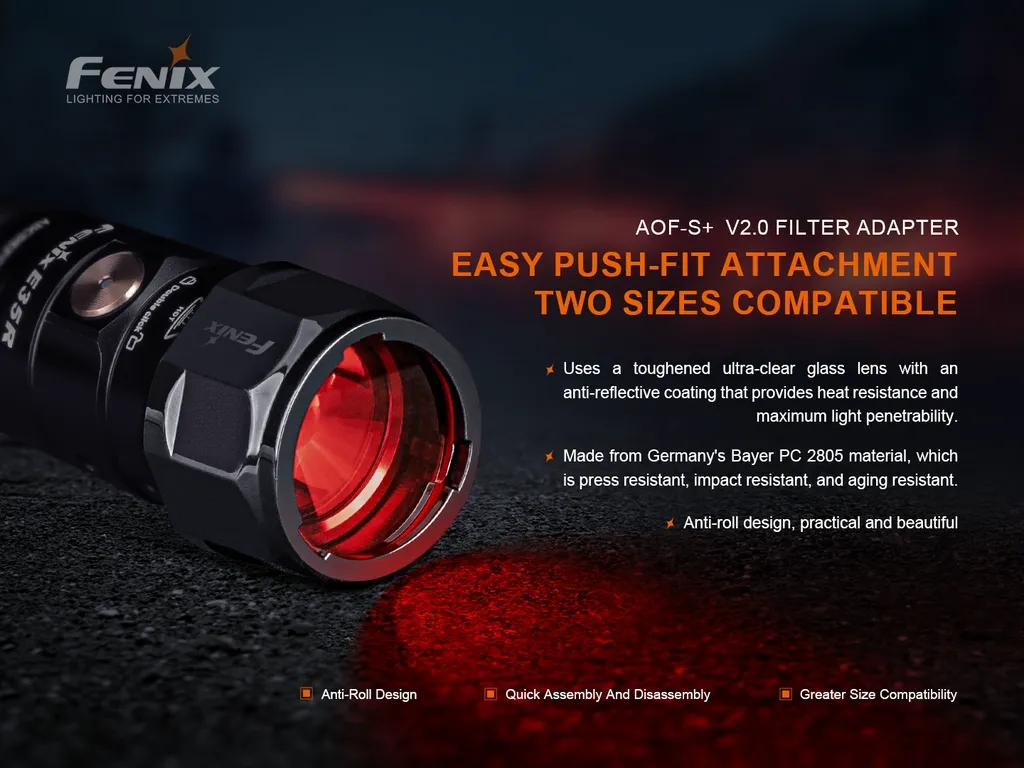
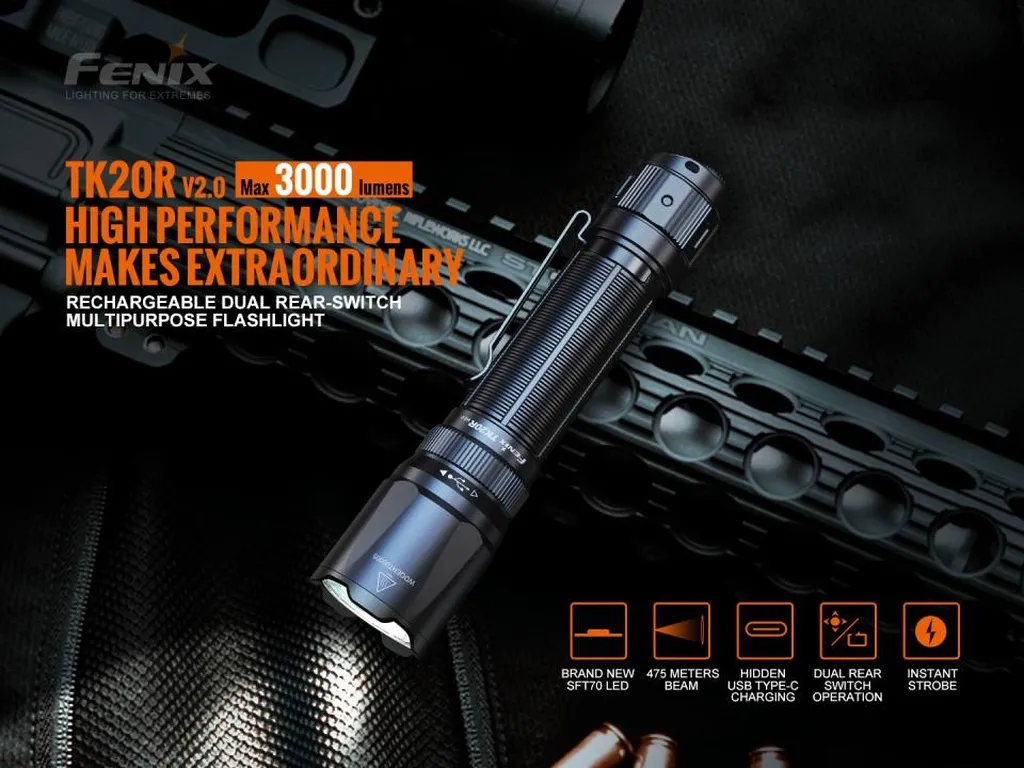
Two approaches. Some Fenix lights include a dedicated red mode built in — handy when you want red on tap without extra parts. For high-output tactical lights, the AOF-S+ filter system slips red or green filters over compatible models, so a thrower like the TK20R V2.0 becomes a colour-capable tool without buying a second light. Browse compatible lights and filters on the gun lights page.
Using red light well
Keep it dim — the whole point is the lowest output that lets you do the task. Switch to red before you need your night vision, not after you've already bleached it with white. And remember the trade-off: red preserves your eyes but reduces contrast and hides true colour, so it's a poor choice for tasks like identifying blood, reading colour-coded wiring, or detailed inspection, where a neutral white tint serves better. Match the colour to the job, and the dark stops being a handicap.